
Overcoming Challenges in Indian Urban Drainage; Why Sewer Cleaning Robots Are More Relevant Than Ever
India’s rapidly growing urban centres are expanding at an unprecedented pace. With rising populations, dense construction, erratic rainfall patterns, and aging drainage networks, cities today battle a wide range of sanitation problems.
India’s rapidly growing urban centers are expanding at an unprecedented pace. With rising populations, dense construction, erratic rainfall patterns, and aging drainage networks, cities today battle a wide range of sanitation problems. Overflowing drains, monsoon flooding, blockages caused by solid waste, and hazardous working conditions for sanitation workers have become regular concerns for municipalities across the country.
In this scenario, technology has emerged as a critical ally. Among the most promising innovations in urban sanitation is the rise of sewer cleaning robots, advanced systems designed to eliminate manual intervention, enhance cleaning efficiency, and support cities in maintaining hygienic and disaster-resilient drainage infrastructure. Leading this transformation is Genrobotics, a pioneer in robotic sanitation solutions and the creator of India’s first successful manhole cleaning robot.
This blog explores the complexities of India’s urban drainage challenges, the urgent need for smarter sanitation systems, and why robotic technologies are becoming indispensable for modern cities.
The Complex Reality of India’s Urban Drainage Systems
India’s drainage networks were not designed to handle today’s population density or the volume of waste generated in modern cities. Many drainage channels date back decades some even to the colonial era and have experienced minimal upgrades.
Key challenges include:
- Aging, Narrow, and Non-Uniform Pipes: Most urban drainage lines are narrow, irregular, and prone to collapse. This makes traditional cleaning methods especially human entry extremely dangerous and often ineffective.
- Rapid Urbanisation & Construction Debris: Every rapidly developing city faces increased construction waste, sediment, and silt deposition in drainage channels. These blockages reduce flow rate and cause backups during monsoons.
- Solid Waste Mismanagement: Plastic waste, cloth, food scraps, and other non-biodegradable items frequently enter stormwater drains and sewer lines. Over time, they harden and create stubborn blockages that require advanced tools to remove.
- Monsoon Flooding: Heavy rainfall events expose the limited capacity of urban drainage networks. Flooded roads, waterlogging, and backflow into residential areas occur when drains are clogged or poorly maintained.
- Hazardous Working Conditions for Sanitation Workers: Despite being legally prohibited, manual cleaning of manholes and sewers still happens in many places. Toxic gases, pathogens, sharp objects, and physical constraints create life-threatening risks.
These challenges highlight an urgent need for safer, scalable, and technologically advanced solutions and this is exactly where robotic manhole cleaning systems come in.
Why Traditional Cleaning Methods Are No Longer Enough
For decades, drainage maintenance has depended on:
- Manual labor
- Basic mechanical tools
- Jetting machines
- Desilting trucks
While these methods provide temporary relief, they do not address deeper structural and safety issues.
Limitations of traditional methods:
(a) Safety Risks
Toxic gases like methane, hydrogen sulfide, and carbon monoxide inside manholes can cause unconsciousness or death within minutes. No human should be inside such hazardous environments.
(b) Incomplete Cleaning
Jetting machines can dislodge blockages, but they often fail in deep, narrow, or irregular sewer networks.
(c) Limited Accessibility
Human entry is impossible in extremely narrow, water-filled, or collapsed drainage lines.
(d) Slower Response Time
During monsoon emergencies, cities require rapid clearing. Manual methods cannot match robotic speed and precision.
(e) High Health Costs
Sanitation workers exposed to pathogens often suffer long-term health complications including skin diseases, respiratory infections, and muscular injuries.
Given these limitations, Indian cities need modern tools designed for the scale and complexity of today’s urban challenges.
The Rise of Sewer Cleaning Robots in India
Technology-led sanitation is no longer a futuristic concept. Over the last few years, India has witnessed a major shift toward automation in waste and drainage management. Genrobotics, through its innovations, has been at the forefront of this revolution.
What Makes Sewer Cleaning Robots Essential Today?
- Zero Human Entry
Robots eliminate the need for workers to physically enter manholes or sewers, ensuring complete safety and dignity for sanitation workers.
- Advanced Blockage Handling
Modern robots are equipped with high-precision tools to break, cut, scoop, and remove all types of blockages including solid waste, silt, plastic, fats, and hardened sediment.
- Adaptability to Indian Conditions
Unlike imported machines designed for uniform pipelines, robots like the ones from Genrobotics are built specifically for India’s diverse, unpredictable, and often difficult drainage structures.
- High-Resolution Visual Inspection
Robots provide real-time camera feeds, allowing municipal engineers to analyse pipe conditions without excavation.
- Efficient Desilting
They can reach depths and bends that manual tools cannot, ensuring more thorough cleaning.
- Faster Response During Emergencies
In flood-prone areas, robotic systems enable quick clearing of choke points, reducing urban flooding impacts.
The shift toward robotic manhole cleaning is helping cities transition from reactive cleaning to preventive, data-driven sanitation management.
Genrobotics: India’s Pioneer in Manhole and Sewer Robotics
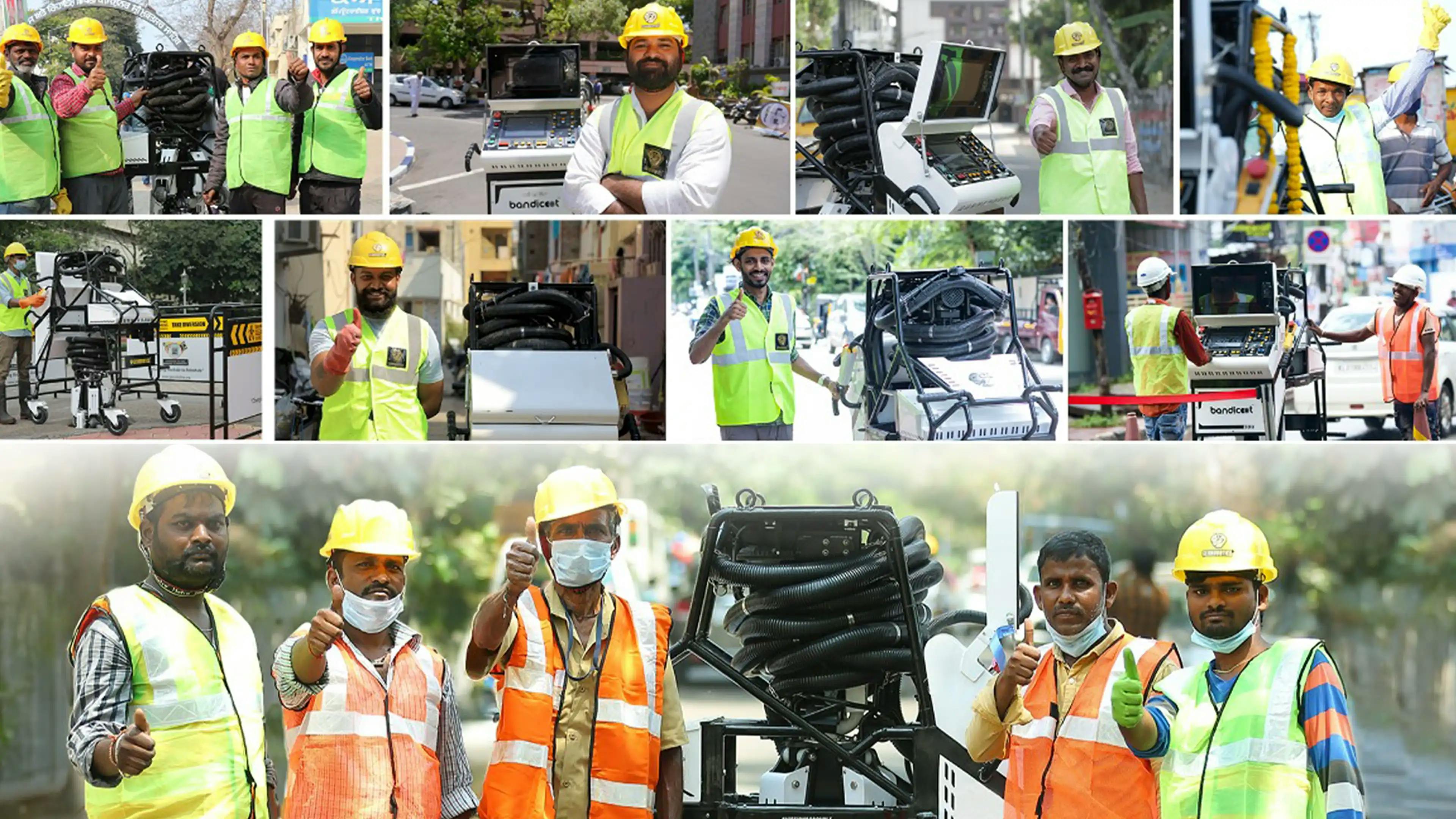
Genrobotics has become synonymous with safety, innovation, and social impact in the sanitation sector. Its groundbreaking creation the Bandicoot manhole cleaning robot has transformed how cities approach sewer maintenance.
Key highlights of Genrobotics’ innovations:
1. Designed for Indian Drains
The Bandicoot robot can navigate narrow manholes, uneven structures, and complex blockages.
2. Highly Efficient Cleaning Process
Its robotic arms mimic human dexterity, enabling thorough cleaning without physical entry.
3. Operator-Friendly Controls
Sanitation workers are trained to operate robots through intuitive interfaces, turning them into skilled robotic technicians.
4. Significant Social Impact
Thousands of sanitation workers have transitioned into safe, skilled jobs thanks to Genrobotics’ technology.
5. Widely Adopted Nationwide
Municipal corporations across India including smart cities have adopted these systems to modernize their sanitation efforts.
By combining engineering excellence with a mission to eliminate manual scavenging, Genrobotics has set new standards for urban sanitation technology.
How Sewer Cleaning Robots Solve India’s Drainage Challenges
Let’s look at how robotic solutions directly address key drainage issues:
1. Removing Deep Blockages
Robots can reach deeper than manual tools, allowing cleaning of extensive sewer lines.
2. Handling Solid Waste Accumulation
Powerful cutters and scoops can tackle hardened waste that often clogs old pipelines.
3. Improving Flow Rates
Regular robotic cleaning ensures smooth water flow, reducing risks of monsoon flooding.
4. Eliminating Human Exposure to Toxic Environments
Robotic systems remove the need for manual entry, drastically cutting health risks and fatalities.
5. Rich Data for Infrastructure Planning
Visual inspections and reports help municipalities understand structural damage, erosion, and repair needs.
6. Faster Problem Diagnosis
Live feeds help engineers identify problem points immediately and respond accordingly.
7. Cost Efficiency Over Time
Though robotic systems are an investment, they reduce long-term maintenance, emergency response costs, and health risks for workers.
The Future of Urban Drainage Maintenance in India
As India moves toward smarter, safer, and more sustainable cities, sanitation cannot be an afterthought. Effective drainage maintenance plays a vital role in:
- Public health
- Flood prevention
- Environmental protection
- Quality of urban living
- Worker safety
With the government pushing for mechanisation and digital transformation in municipal operations, sewer cleaning robots are set to become standard equipment across cities.
Upcoming trends include:
- AI-based blockage prediction
- Autonomous robotic fleets
- Integrated IoT sensors in drainage lines
- City-wide robotic cleaning networks
- Cloud dashboards for real-time sanitation analytics
Genrobotics continues to lead these innovations, expanding its solutions and enabling municipalities to adopt next-generation tools that match the pace of urban development.
Conclusion: Sewer Cleaning Robots Are No Longer Optional; They Are Urgent and Necessary
India’s urban drainage challenges are complex, deep-rooted, and evolving. Traditional cleaning methods cannot cope with the scale of urbanisation or ensure the safety of sanitation workers in hazardous environments. Innovations like the manhole cleaning robot and sewer cleaning robot developed by Genrobotics are not just technological upgrades, they represent a fundamental shift towards a safer, smarter, and more sustainable sanitation ecosystem.
As cities expand, drainage networks must adapt. And the most effective way to do that is through robotic manhole cleaning systems that offer precision, speed, safety, and long-term efficiency.
For India’s future growth, adopting sewer cleaning robots is not just a choice — it’s a necessity for building resilient, clean, and humane urban spaces.